
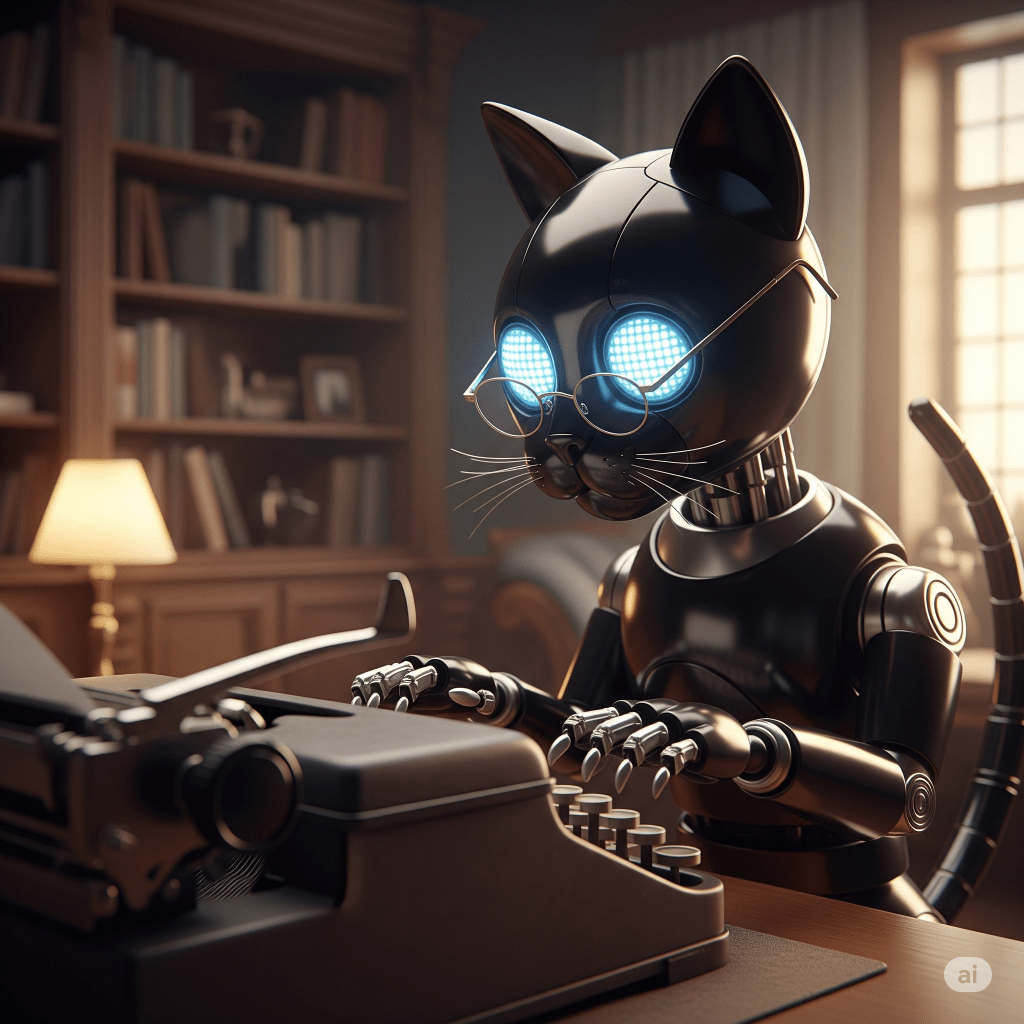
Can AI write formulaic screenplays as well as humans? There are many formulaic structures around: Save the Cat, the Three Act structure, and the heroic journey, to name just a few. These predefined templates have a recommended structure to follow based on previous experience of what has worked well. As a result, the structures are taught at film schools and are well known in the industry. Can AI write screenplays following these structures, and if so, what does that mean for screenwriting as a profession?
Jeff Bellow (of FAST Screenplay fame) hosted an interesting session the other day on the future of AI and the screenwriting profession. I am not going to repeat all he talked about here, but AI generated vs human created screenplays was an interesting topic he spoke on. (If you want to learn more about Jeff’s opinions, check out his website, https://fastscreenplay.com, or YouTube channel, https://www.youtube.com/@fastscreenplay.)
His opinion: Yes, in the next few years AI will probably be able to write screenplays, following these set structures, as well as humans. Why? Because AI is great at patterns. Large language models like ChatGPT, Claude, and Gemini are trained on large quantities of data. Understanding and recognizing common patterns is core to how they work. Given a structure, they absolutely can generate content following that structure, and probably follow it better than most humans.
But! There is risk that this will lead to the rise of AI slop. If AI is consistently used to take a major part in writing screenplays, there is a very real risk of everything starting the look the same. AI effectively learns by looking at the common. So everyone following AI recommendations may lead to all screenplays feeling similar.
Does that mean formulas for screenplay structure are evil, to be burned at the stake? No. Just don’t over use them. Don’t use the same structural formula over and over again. Formulas can be a great as training wheels while you learn the basics, but good writers should eventually think of better ideas and approaches, growing beyond absolute adherence to formulas.
Given there are so many screenwriters out there, why do we even need AI to write such content? For most production companies, it is a matter of speed and economics. The world of consumption is changing. In 2025, social media creators are expected to surpass traditional media in advertising revenue, putting budgetary pressure on traditional content production. Also, the increasing quality of AI generated video poses a new challenge in the coming few years. It will be increasingly cost effective to create “average” content. Decent, entertaining content is likely to become affordable for many to create. There will still be the big blockbusters with big budgets, but for smaller shows, the production budget is probably going to shrink, writers will be asked to create content faster, the use of tools like AI to assist in creating content will rise.
How real is the risk of AI and formulaic content becoming the norm? Saga is an example of tool for screenplay writers, and I think it gives a possible taste of the future.
- You start with a project
- You fill out a form to provide information about a series
- You then provide a list of characters with descriptions
- You can also define seasons
- Within seasons you can define episodes
- Inside episodes you define acts, with predefined templates for common structures
- You then define beats – again with predefined templates
- Then you write the script
At almost every stage, you fill out a form. Then every text box has an AI “Generate” button if you don’t want to write the text for that field yourself. You can fill in all the character details by hand, or you can type up some information and click “Generate” and see what it comes up with. Try a few times until you are happy. This goes all the way down into the screenplay text. It makes it really fast to create new content that follows a recommended structure, and this tool is available today.
I am not saying I think Saga is bad for the industry – it can actually be a useful tool to help new writers learn the basics, and help screenwriters meet deadlines. But exploring Saga I quickly came away thinking it could result in a lot of content ending up with similar structure, if used naively. It also runs the risk of hurting the skills of writers if writers come to depend on such AI backed tools to come up with creative new ideas and shape the structure of content.
A core part of Jeff’s message was modern screenwriters need to learn AI and keep up with trends, but still maintain their personal perception and skills. They need to work hard to be better that AI generated slop, whatever it takes.
What was Jeff’s final message? Screenwriters should educate themselves on AI and its trends. It can be a great tool in many circumstances. But professional writers should go beyond such tools. They need to be vigilant with their craft and know when it’s safe to go off the normal path and break the rules of formulas. The ultimate success is the creating of a great story, and not how close a screenplay follows recommended formulaic structure.
 Extra Ordinary, the Series